The Last Light Ledger: A Dusk Checklist for Buying a Dream Car in November
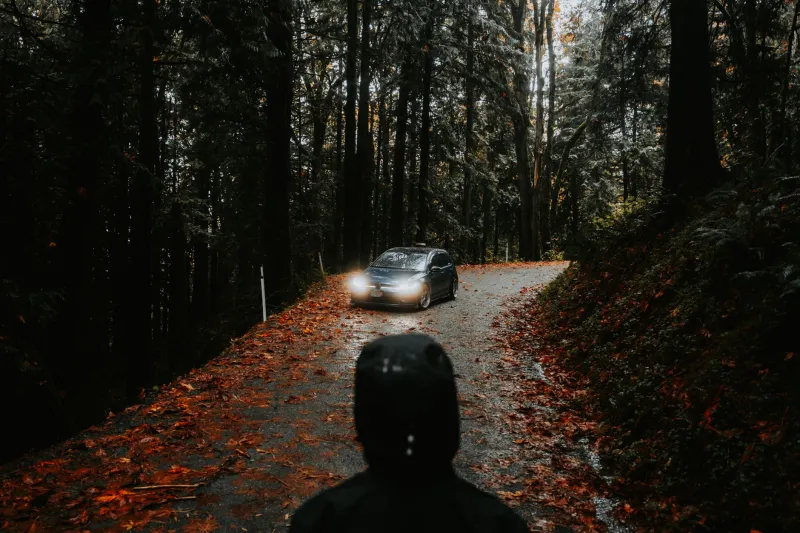
There is a particular kind of light in Britain in mid-November. It arrives late, hangs around for about four hours, then leaves in a hurry, dragging a long orange shadow across every panel it touches. Most buyers treat this as an inconvenience and book their viewings for eleven o'clock on a Saturday, when everything looks lovely and nothing is revealed.
We'd argue the opposite. The three o'clock appointment — that golden, raking, slightly desperate hour before the streetlights blink on — is the most honest scrutiny a used performance car will ever face. It's the motoring equivalent of a friend who tells you the truth about your haircut.
Here's how to make that hour work for you.
Why the low sun is the cheapest inspector you'll ever hire
Overhead summer light flattens everything. A car can be wearing three shades of silver, a fistful of filler and a rear quarter that has been lovingly caressed by a bollard, and at noon in July it will still look like the classified photo.
Low sun does the opposite. It rakes across panels at an angle, and suddenly the story writes itself: ripples where a panel should be glass-flat, a door that's a half-shade off its neighbour, the faint sandpaper texture of a smart repair, overspray on rubber seals, the tight halo of a blow-in around a wheel arch. Walk a full lap with the sun behind you, then another with it in front. Your eyes will pick up things your brain thought it had missed. Look specifically for panel gaps that tighten or widen along their length, and for reflections that break instead of flowing.
Also look at ground level, because nobody kneels. Kerbed alloys, scuffed splitter edges, gravel rash along the sills and a front bumper that's been parked by feel rather than by camera are all visible in a way that a torch-lit garage inspection never quite manages.
Bring a torch, because the dark arrives early
By four o'clock in November you'll be squinting into the arches. This is where the cheap torch earns its keep.
Get down and put light into the places a seller hopes you won't: the inner edges of the sills, the boot floor and spare wheel well, behind the rear bumper mounts, around the suspension turrets, the bottom of the doors and the inside of the wheel arches where mud traps against metal. Look for tide marks. A car that lives outside in a British autumn will get wet — that's fine — but water should drain, not pool. Damp carpet under a mat, a misty bootlid, a faint smell of pond in the cabin: all worth asking about, gently, with the seller standing right there.
A magnet wrapped in a cloth is an old trader's trick for finding filler, though on aluminium-bodied cars it will tell you precisely nothing. If in doubt, a paint depth gauge costs less than a tank of fuel and settles the argument in seconds.
The misting test, before the engine warms up
Ask the seller not to pre-warm the car. You want it cold and, ideally, a bit misted, because a November evening hands you a free climate-control diagnostic.
Sit in, shut the door, and watch the screen clear. Does the blower shift serious air on demand? Does the demist function actually demist, or merely wheeze? Is there a damp, sweet smell from the heater matrix? Do the footwells and rear screen follow suit at the same pace, or is one side lagging — a hint at a blocked pollen filter, a tired blower motor or a flap that's stopped flapping?
Then check the obvious things people forget in the excitement: heated rear screen elements (look for dead lines as it clears), heated seats, wing mirror demist, washer jets, and wipers. Wipers are the giveaway. If they smear across the driver's side in the dark, you'll be thinking about it every single rainy commute.
Lights tell you more than you think
Flick everything on and walk around the car. Condensation inside a headlamp unit is common and not always fatal, but a lens half-full of droplets is a conversation. Look for mismatched colour temperatures between sides — a cheap replacement unit is easy to spot at dusk. Check that the indicators and brake lights work on both sides, and that the number plate lamps do their job.
Inside, the dashboard in gloom is a different country. Warning lamps that were invisible in daylight tend to glow a little more honestly under a dim sky. Bring the ignition to the point where every bulb self-tests, then watch what stays lit after start-up. If the seller is the sort to have "cleared" a light by pulling a fuse, you'll want a diagnostic read anyway — but the gloom is where the honest ones show themselves.
The cabin in raking light
Late sun through the side glass is brutal on interiors. It picks out shine on a steering wheel rim, the flattened weave of a worn bolster, a driver's seat that sits a good centimetre lower than its passenger twin, and the faded patch where a previous owner's elbow lived for eighty thousand miles.
Check the infotainment screen for delamination at the edges, the switchgear for the sticky, shiny look of heavy use, and the pedal rubbers for wear that contradicts the mileage. Open and close everything twice — glovebox, cubbies, sun visors, the boot. Rattles and sloppy hinges are quieter to fix later than to discover on the test drive.
And use your nose properly. Air fresheners are a smell, not a solution.
Then drive it into the dark
This is the part most buyers skip, and it's the best bit. A test drive at half four means you'll finish in genuine darkness, which is a proper test of the car you'll actually own for five months of the year.
Find an unlit stretch and check the headlamp aim and spread — a beam that lights the hedgerows and leaves the road dark is a beam that will exhaust you on a January motorway. Listen for tyre roar on coarse surfaces (cheap rubber shouts), feel for a steering wheel that shimmies at seventy, and test the brakes from cold. Ask for a cold start, not a warm one. If the car has been run for twenty minutes before you arrive, that's a question in itself.
The kit that turns a hunch into a decision
- A decent torch, plus a spare battery
- A microfibre cloth for wiping lenses and reading paint
- A paint depth gauge if you're serious
- A printed checklist, so adrenaline doesn't edit your memory
- Insurance for the test drive, sorted before you leave the house
- A phone with the MoT history open — the paperwork deserves as much scrutiny as the panels
The upside of buying in the gloom
Here's the part that keeps us cheerful. Late November is a genuinely good time to be a buyer. Sellers are motivated, weekends are scarce, and a car that's been advertised since September is starting to feel like furniture. Turn up prepared, name the faults calmly and with evidence, and you'll often find a price that would have been laughed at in May.
Then drive home in the dark with the heater on, the headlights carving a tunnel through the fog, and every mile feeling like a small victory. Dream cars don't need sunshine to feel special. Sometimes the best ones are the ones that look after you when the light goes.
Get the inspection right at three o'clock, and the rest is just driving.