Low, Stiff and Skint? How to Spec a Dream Car for Britain's Battered B-Roads
Dream-car brochures have a lot to answer for. The car is always glossy, the road is always smooth, and the sun is always bouncing off a mountain pass that looks suspiciously like it has never seen a gritter. Britain in 2026 is a different film. Our roads are a patchwork of resurfaced stretches, sunken manholes, speed cushions and potholes deep enough to post a letter into. If you are buying something special, the spec sheet matters every bit as much as the badge.
This is not a plea to buy something dull. Far from it. The whole point of Pudsey's Dream Wheels is celebrating cars that make you look back at them in the car park. But a dream car you are too frightened to use is not really a dream. It is a very expensive ornament. So let's talk about the real-world tax — and how to spec around it.
The real-world tax starts at the wheels
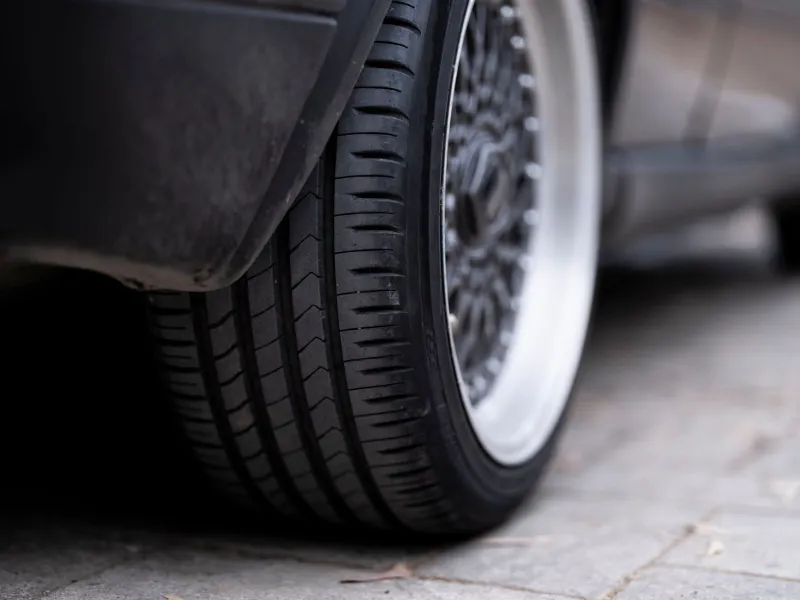
Big wheels look brilliant in photographs. Twenty-one-inch alloys, a 30-profile tyre and a stance that suggests the car has been lowered by a teenager with a grudge. Then you hit a pothole on a B-road near Skipton and the fun stops.
Low-profile tyres are brilliant at protecting nothing but your ego. A pinch puncture can write off a £300 tyre in a second. A bent rim is £80–£150 to straighten, or £600-plus to replace if the damage is nasty. Kerbing is the other silent killer; a set of diamond-cut alloys can look secondhand after one winter of narrow multi-storey ramps and country lanes with grass growing down the middle.
Wheel and tyre insurance can help, but read the small print with a torch. Many policies exclude cosmetic damage, cap claims, or apply an excess that makes a small repair pointless. For plenty of owners, self-insuring is smarter: put £500 aside each year and treat it as a wear-and-tear fund. It is boring, but so is a £1,200 bill in March.
Suspension: the bit that quietly empties your wallet
A stiffly sprung car feels sensational on a smooth road. On a British road, it turns every cat's-eye into a percussion instrument. Bushes, top mounts, drop links and damper seals all take a beating. Adaptive dampers are wonderful when they work; when they don't, a replacement corner can run from £700 to £1,500 depending on the car. That is before labour, geometry and the alignment printout you will want to keep for resale.
If you are ordering new or choosing between two used cars, favour the one with adaptive dampers and a comfort setting. Smaller wheels with taller sidewalls are not a compromise — they are a performance upgrade for real roads. A 19-inch wheel with a 40-profile tyre will often ride better, steer more sweetly and survive more potholes than a 21-inch wheel with rubber bands. It will also be cheaper to tyre, which means you can afford better rubber.
Be wary of cars that have been lowered on coilovers. Some are fine. Many have been wound down for the look, with geometry set up by hope rather than a laser. A standard-height car with a fresh alignment and quality dampers is usually the better buy.
Ground clearance and the art of the angled exit
Splitters, side skirts and undertrays look fantastic. They also act as sacrificial sensors for every speed hump, farm gate and multi-storey ramp in the country. If your dream car has a nose that could double as a snowplough, check whether it has a front-axle lift system. If it doesn't, learn the angle-of-attack routine: approach driveways at an angle, reverse into spaces, and accept that some car parks are simply off-limits.
Paint protection film on the leading edges is money well spent on a low car. So are mudflaps and stone guards, even if they are not the most glamorous options on the configurator. A £400 film kit can save a £1,500 front-end respray. That is the sort of maths that keeps a dream car on the road rather than in a bodyshop.
Tyres, pressures and the pothole survival kit
Tyres are the only thing between your pride and joy and a crater. Do not run track-focused rubber all year in Britain. Below about 7°C, many summer tyres lose the plot, and a cold, wet B-road is not the place to discover that. A premium performance tyre with a strong sidewall is usually the sweet spot; an all-season tyre makes sense if the car is used through winter.
Check pressures monthly, not just before a long trip. A soft tyre is far more likely to be pinched by a pothole. Keep a 12-volt compressor, tyre sealant, a torch and gloves in the boot. If your car has a space saver, make sure it is actually there and inflated. Run-flats are convenient until you are stranded in rural Wales with a sidewall gash and no mobile signal.
Report potholes to the local council. It is tedious, but it creates a record, and if you do damage a wheel you will need evidence to support a claim. A dashcam is useful here, too. Boring? Yes. Sensible? Very.
Resale: the market loves a usable dream car
When you come to sell, buyers will thank you for a standard, well-maintained car. Modified, lowered, track-used examples can be brilliant value, but they can also be harder to shift. A full service history, branded tyres, an alignment printout and a folder of receipts are worth more than a long list of cosmetic mods. A car that can be used all year, in all weathers, is a car more people want to own.
Colour and options matter, too, but not as much as condition. Buy the best example you can afford, then spend a little on protection rather than on another set of wheels you will only kerb.
The spec that survives Britain
- 19- or 20-inch wheels with 35- or 40-profile tyres
- Adaptive dampers with a comfort mode, not just a sport button
- Front-axle lift if the nose is low
- No carbon splitter unless you enjoy replacing it
- Paint protection film on the nose, sills and mirror caps
- Premium tyres, correctly inflated, with a usable spare or sealant kit
- A pre-purchase inspection and a geometry check
- A £500 contingency fund for the inevitable
Dream cars are for driving, not just polishing. Spec for the roads we actually have and you will use the thing more, worry about it less, and grin every time you fire it up. That is the real dream — a special car that fits into real life, potholes and all.